What did your journey to faith look like?
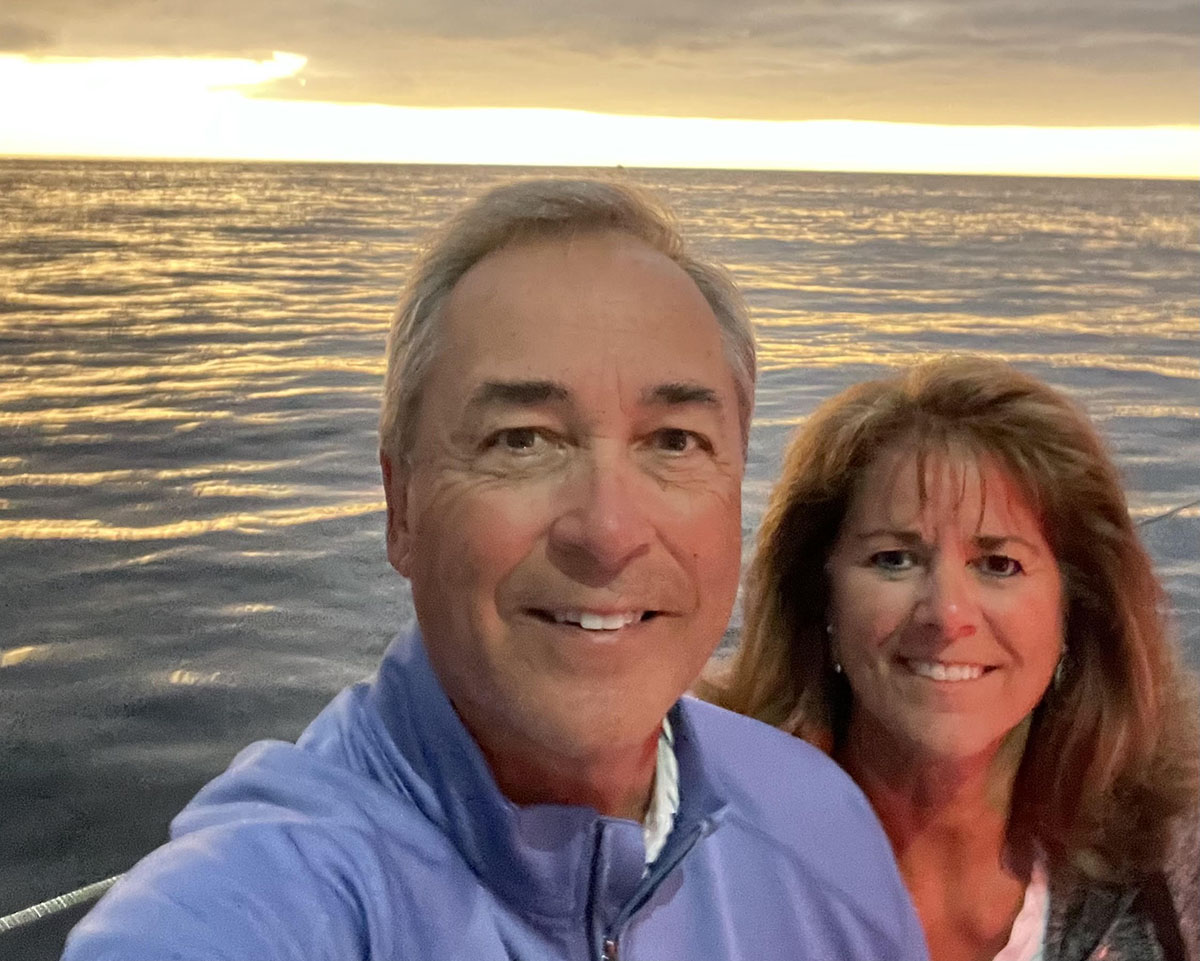
Perhaps it was a story of how God showed up in the midst of uncertainty, doubt or fears. Maybe it involved Him seeking you out and rescuing you. Or maybe you grew up in a Christian household and your story is a bit different — perhaps your family regularly read the Bible together and have always known about Jesus’ love. Ken Trager was raised that way.
He reflected, “I think when you’re raised in a Christian home … and you have the routines of a life that is built around church and prayer, you just take it for granted.” He added, “It was just the air I breathed.”
For Ken and his wife, Sally, faith was always part of their stories. They were each raised in Christian homes, followed Christ, got baptized and had parents who faithfully modeled church attendance, prayer and generosity. Ken and Sally’s paths eventually crossed at Greenville University in southern Illinois, where they met and fell in love. They went on to build a life centered around family, faith and service. Ken spent his career as a teacher and coach while Sally worked as an accountant, and together they raised two children. Now retired, they’ve moved to be closer to their children and grandchildren, giving them a new opportunity to pour into the next generation.
Through all those years and seasons, the faith Ken and Sally had seen modeled by their families continued to shape their home.
Early in their marriage, Ken and Sally met a mentor who encouraged the couple to go deeper with their faith — to study Scripture, ask questions and wrestle honestly with what they believed.
It was an important season of discovering that the faith that had been passed down from their families could also become something they personally owned and lived out together.
What Do You Take for Granted?
Years later, the couple experienced an aha moment when they were introduced to Wycliffe at an event.
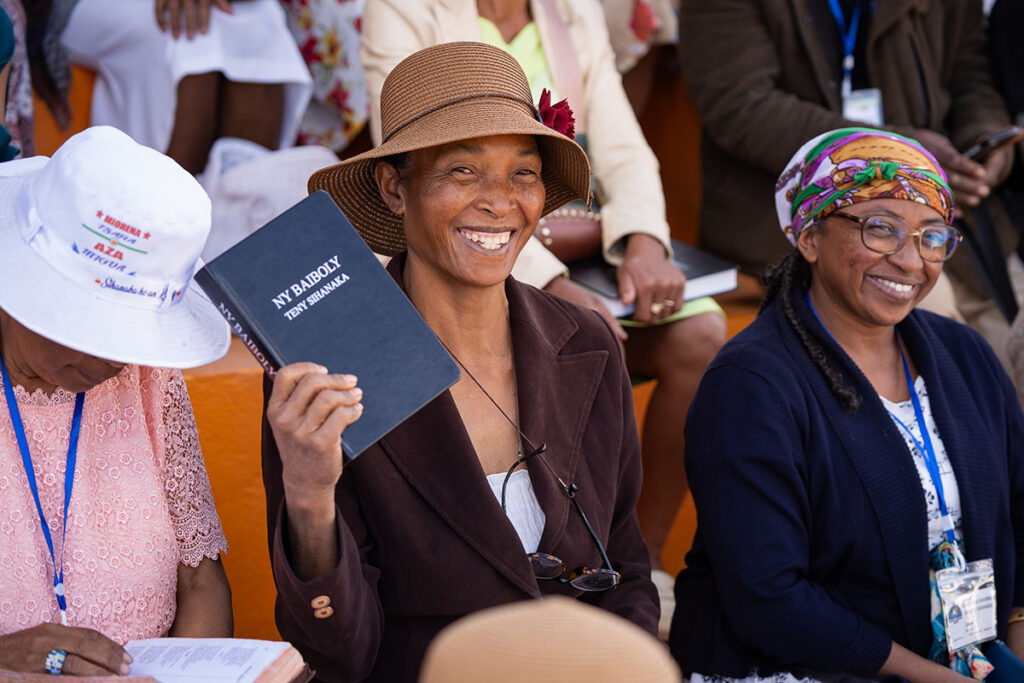
There, Ken and Sally heard story after story from people who had received Scripture in their own languages. Something clicked for Sally: “We’ve never known a day where we couldn’t access the Bible. And these people have just longed for it, and they’re finally getting it.”
For the first time, something that had always surrounded the couple became visible — and it was a gift they could no longer take for granted.
Ken and Sally had spent years thinking about the importance of God’s Word. Seeing people receive Scripture in their own languages helped them understand just how extraordinary that access is.
“The power of salvation comes through that,” Ken said. “I can’t think of … [a more] important work than providing God’s Word to everybody in the world.”
Sally agreed. “To have His Word is as if we’re hearing the voice of God,” she said. “God works through His Word.”
This conviction — for people around the world to be able to access Scripture for themselves — became one of the reasons Ken and Sally prioritized a place in their giving for Wycliffe. But it also became part of a larger question about generosity they had been asking themselves for years:
“If everything we have is a gift from God, what does it look like to live generously with it?”
A Generous Heart
Generosity, like faith, was something Ken and Sally had grown up around. Ken remembers his dad giving him money to put in the offering plate, and Sally remembers watching her parents give not just to their church but to people and organizations in need. Sally’s father especially enjoyed giving anonymously.
As Ken and Sally have grown older, they’ve learned that generosity isn’t simply about giving a certain percentage or checking a box; it’s about continually asking what it means to have a generous heart.
For Ken, the question of what it means to be generous has become what he calls “Kingdom Advancement Giving.” When contemplating giving, he asks, “Is this going to advance the Kingdom for God’s glory?”
That question has shaped the way the couple thinks about which individuals and organizations they support. But over the years, they also began to realize that generosity isn’t only about where you give — it’s about how you give too.
Their relationship with Wycliffe opened the door to those conversations. Through Wycliffe Foundation, Ken and Sally were able to talk with people who understood both their heart for generosity and the practical questions that come with stewarding resources well.
What if you saw stewardship as an act of worship?
Millie was able to endure numerous trials and difficult circumstances throughout her 93 years of life because of the power of God’s presence and the anchor of His Word. Today, her view of generosity is shaped by a passion to bring Scripture to others.
Read “When Generosity Becomes Worship” →
Discovering New Possibilities Through a Donor-Advised Fund
During conversations with Wycliffe Foundation, the couple learned about something they hadn’t considered before: a donor-advised fund (DAF). A DAF is a charitable giving account that can make it easier to be intentional about giving. You can set aside resources for charitable giving and then decide over time which organizations you want to support. Ken and Sally had family assets that would eventually need to be sold, and suddenly they began asking questions. Michael, a Wycliffe Foundation gift planning advisor, helped the couple think through what they could put in place ahead of time. What they discovered was surprisingly simple.
The flexibility of a DAF was a big part of the appeal for Ken and Sally. They didn’t have to know every organization they might want to support years down the road; they could make a charitable gift when the timing made sense and then have the freedom to decide where those dollars could make a difference as opportunities arose. Ken said, “When there’s a spontaneous need, I have the ability to help with that.”
There can also be meaningful tax advantages, depending on what is given and a donor’s circumstances. For example, giving appreciated assets to charity can sometimes be more tax-efficient than selling those assets first and giving the proceeds. A DAF can provide a way to bring those charitable and tax considerations together while keeping the focus on generosity.
Ken and Sally see wise financial planning and generous giving as complementary actions. Both are ways of asking the same question: “How can we make the most of what God has given us?”
Ken’s advice to others is simple: “If you have a heart for giving, you want to make sure you’re doing it in the most optimal way. Find people who understand these things and can explain them clearly.” That means taking the time to understand your options so that your generosity can go as far as possible.
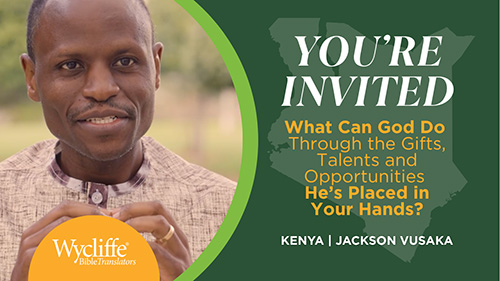
God blesses His people so they can be a blessing to others. Jackson Vusaka reminds Christians that God often uses ordinary people who take faithful steps of obedience to accomplish extraordinary things.
See how small steps make profound progress →
Learning to See What God Has Placed in Your Hands
Looking back, Ken and Sally can recognize the gift of being raised in families that were rich in faith and generosity. They both grew up with God’s Word always within reach, and it took seeing someone else receive Scripture for the first time to realize how extraordinary that access really is. That’s why Bible translation is so necessary: It’s not about an end product; it’s about seeing lives transformed as people meet Jesus in a language and format they clearly understand.
In order for individuals, churches and whole communities to experience life transformation, Scripture needs to be accessible to them. This means that it needs to be either in print, audio format (for communities that prefer oral communication) or video format (for Deaf communities that use sign language).
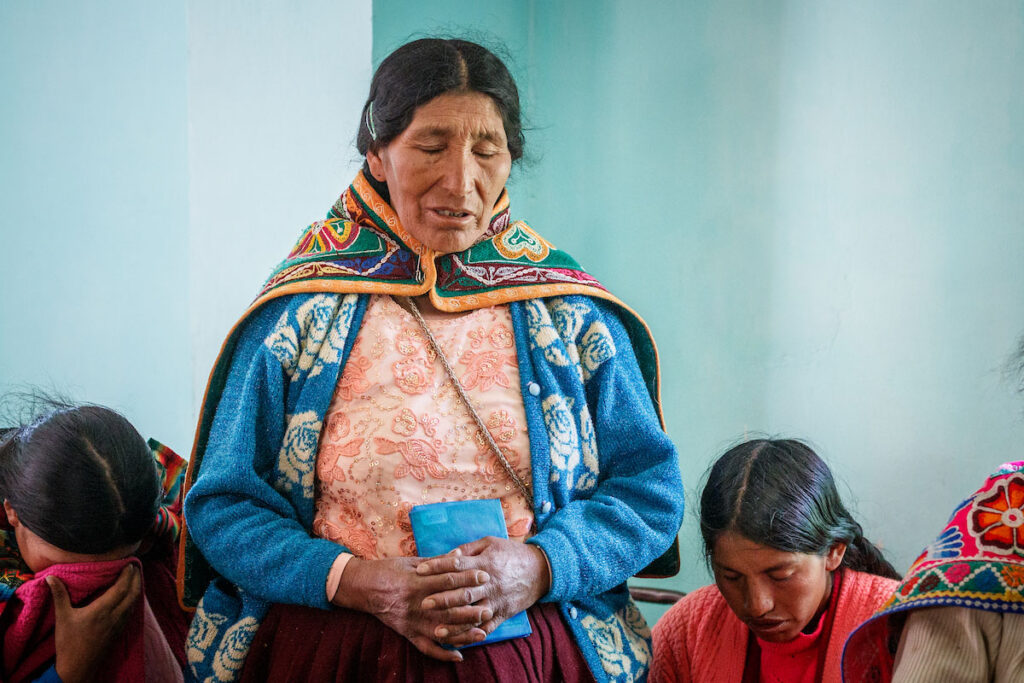
While the journey of Bible translation looks different for each community, it’s all done in pursuit of seeing God’s Word made available so that every man, woman and child can encounter Jesus personally through Scripture.
Ken and Sally have spent their lives discovering more deeply the gifts God has placed around them and in their hands. They’ve recognized that stewardship is about learning to see what God has given us and opening our hands, trusting in the one who gave it all in the first place.
Think about the ways that the Bible has impacted your own life, and how God has used the truth of His Word to shape your heart and mind.
The Bible is the living Word of God that has the power to capture hearts and transform lives forever. When you partner with Bible translation through your prayers, giving and advocacy, you’re part of the bigger story God is writing all around the world: a story culminating in our promised future described in Revelation 7:9a when there is “… a vast crowd, too great to count, from every nation and tribe and people and language, standing in front of the throne and before the Lamb” (NLT).
So what has God placed in your hands that you can use to worship Him?